
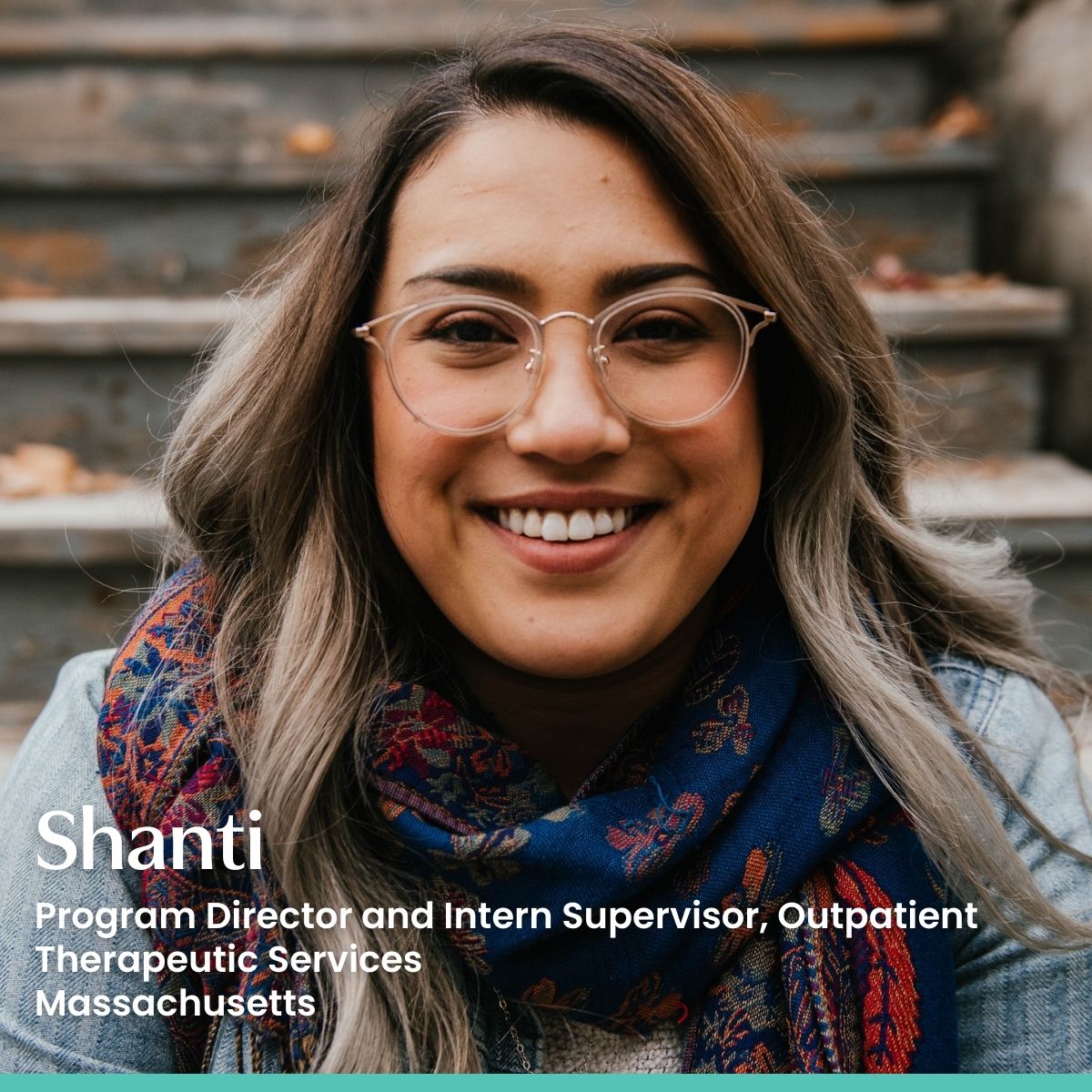
Supporting growth through the internship experience, Shanti shares her perspective:
When I think about supervising interns, what stands out most is the opportunity to help someone step into the profession with confidence. Internships can feel intimidating — you’re moving from theory into real-life situations with real people — and my role is to make that transition supportive, safe, and empowering. Our goal is to help interns experience the work while knowing they have a safety net.
It’s okay to say you feel unsure. It’s okay to ask questions. Growth happens through curiosity and honesty. We focus on helping interns build confidence in their clinical voice. We’re not expecting perfection. We’re focused on progress.
One of the most important things interns should know is that they are never alone. If you’re working late and something happens, call or text. If you’re unsure how to respond in a difficult moment, pause and consult. We would much rather support you in real time than have you carry that stress alone.
Early on, they seek reassurance about every decision. Over time, their language changes. They begin making informed decisions independently. They reach out for consultation rather than confirmation.
I think of it as an “aha bridge.” Interns start at one end uncertain and gradually move toward confidence and professional identity.
Watching that transformation is one of the most rewarding parts of supervision.
Even if time with an individual feels brief, showing up with empathy and attention matters. You are supporting someone’s wellbeing simply by being there.
I remind interns they don’t have to manage those moments alone. It’s okay to say, “That’s an important question — let me consult my supervisor about next steps.” They can contact me immediately, and we walk through the response together.
A Safe Space to Learn and Grow
Internship is often the first time you’re applying classroom knowledge in real clinical settings. That can bring uncertainty, self-doubt, and anxiety. We normalize those feelings and encourage open conversation.It’s okay to say you feel unsure. It’s okay to ask questions. Growth happens through curiosity and honesty. We focus on helping interns build confidence in their clinical voice. We’re not expecting perfection. We’re focused on progress.
One of the most important things interns should know is that they are never alone. If you’re working late and something happens, call or text. If you’re unsure how to respond in a difficult moment, pause and consult. We would much rather support you in real time than have you carry that stress alone.
Growth Happens Gradually
Confidence doesn’t arrive in a single moment. Instead, I see interns grow through progression.Early on, they seek reassurance about every decision. Over time, their language changes. They begin making informed decisions independently. They reach out for consultation rather than confirmation.
I think of it as an “aha bridge.” Interns start at one end uncertain and gradually move toward confidence and professional identity.
Watching that transformation is one of the most rewarding parts of supervision.
Real Clinical Learning — Not Just Observation
Interns don’t just observe — they participate. We work with interns clinically, helping them build skills in real sessions while providing guidance and support.- What did that session feel like?
- Was that conversation difficult?
- What came up for you emotionally?
Making an Impact from Day One
Interns sometimes underestimate the difference they make. Simply listening, affirming, and being present can be deeply therapeutic.Even if time with an individual feels brief, showing up with empathy and attention matters. You are supporting someone’s wellbeing simply by being there.
Navigating Difficult and Emotional Moments
Interns often worry about crisis situations before they begin. The first time a real person expresses thoughts of self-harm can feel very different from classroom role-play.I remind interns they don’t have to manage those moments alone. It’s okay to say, “That’s an important question — let me consult my supervisor about next steps.” They can contact me immediately, and we walk through the response together.